If you're trying to comp a property in Texas, Utah, Kansas, or any of the other non-disclosure states, most public listing platforms won't help you. Sale prices aren't public records in these states, so every tool built on public data is working from estimates rather than verified transactions.
Here's how investors actually get reliable comp data in these markets.
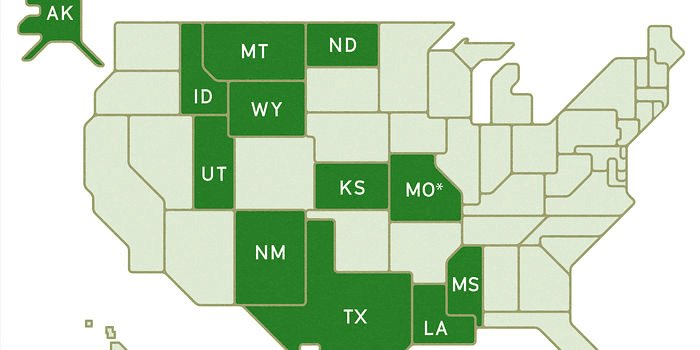
What is a non-disclosure state?
In a non-disclosure state, property sale prices are not recorded in public records. When a home sells in Texas, the deed and transfer documents don't include the sale price. No government office records it publicly.
In disclosure states like California, Florida, and New York, the sale price is recorded with the county at closing. That's why Zillow can show you what a home in Atlanta sold for last month. In non-disclosure states, that data pipeline doesn't exist.
The 12 non-disclosure states are: Alaska, Idaho, Kansas, Louisiana, Mississippi, Montana, New Mexico, North Dakota, South Dakota, Texas, Utah, Wyoming.
Some states keep prices completely out of any record. Others, like Montana and Wyoming, require sellers to report the sale price to a government office but keep it confidential. Missouri is a partial disclosure state where rules vary by county. The practical effect across all 12 is the same: you cannot look up sold prices in any public database.
How to actually get comps in non-disclosure states
A local agent with MLS access is the most reliable option. Every transaction that goes through a licensed agent gets loaded into the local MLS board within days of closing, including the sale price. Most investor-friendly agents will pull comps for free on a genuine deal inquiry — they see it as lead development. This is the ground truth for non-disclosure state comps and should be your foundation in any market you work repeatedly.
The limitation is speed. If you're screening ten deals a day, waiting on an agent for each one doesn't work. Build the relationship before you need it, then use it on deals you're seriously considering.
PropStream aggregates MLS data through vendor agreements and applies proprietary models to estimate sale prices in non-disclosure states. Useful for initial deal screening in active markets. In rural or low-density areas accuracy drops, so treat the output as a starting range rather than a final number.
ChatARV pulls from MLS-sourced sold data across all 12 non-disclosure states and generates a comp report in under two minutes. The report shows which comps were selected and how the ARV was built. If your agent pulls comps you trust more, you can add them directly and ChatARV recalculates. Useful for screening volume and for markets where you don't yet have an agent relationship.
Where data is reliable and where it isn't
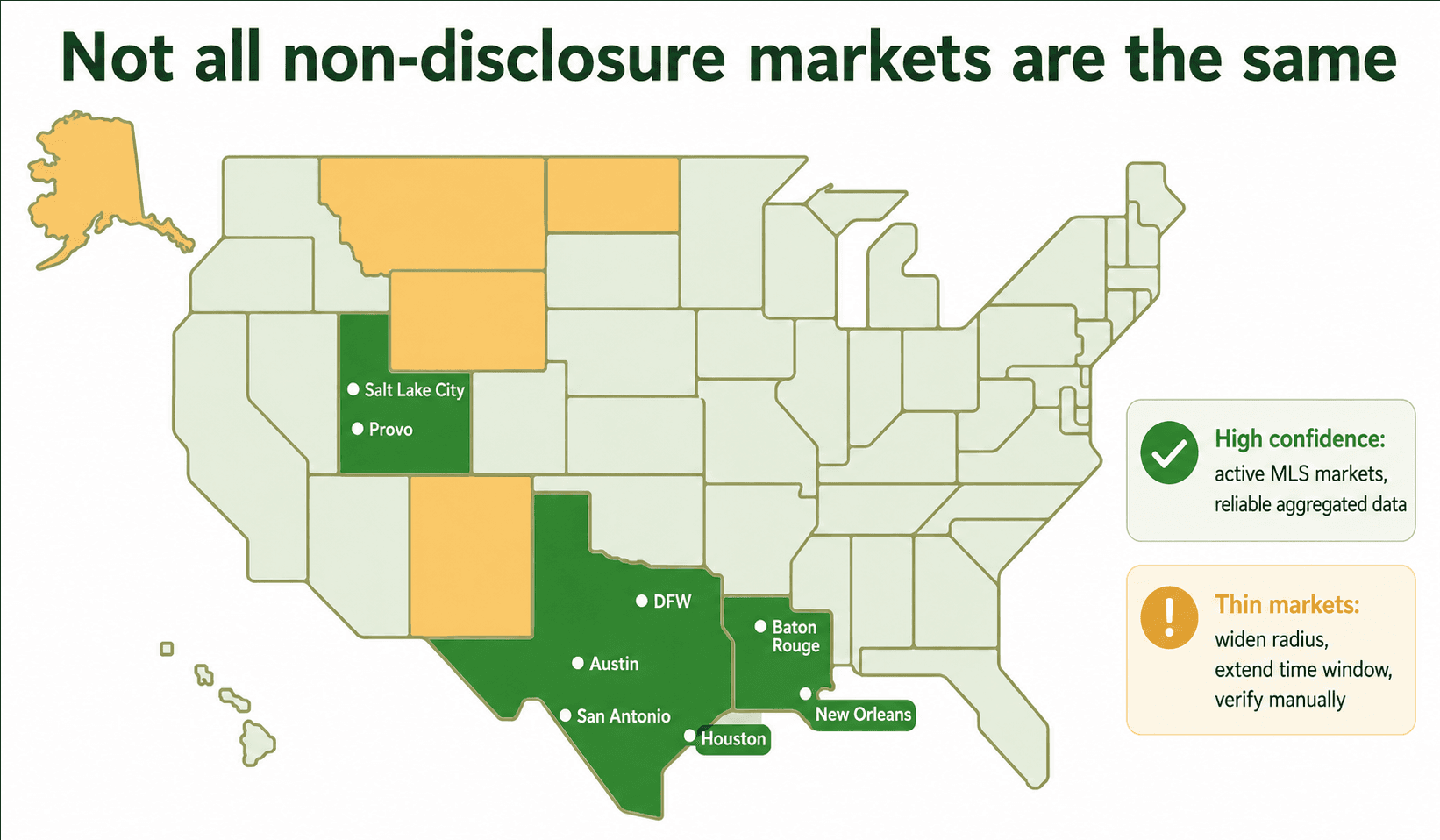
The non-disclosure law is the same across all 12 states. What varies is transaction density, and that's what actually determines how reliable any comp source will be.
In high-volume urban markets like DFW, Houston, San Antonio, Austin, Salt Lake City, and New Orleans, there are enough transactions flowing through the MLS that aggregated data is highly reliable. Any of the three approaches above work well here.
In rural markets the problem isn't the law. It's that there aren't enough comparable transactions in a reasonable radius and time window to build a credible ARV from any source. Rural Wyoming, rural North Dakota, rural New Mexico — widen your radius, extend your time window to six months or more, and apply greater conservatism to whatever number you arrive at. A local appraiser with accumulated market knowledge is worth the cost on significant deals in these areas.
Can I wholesale in non-disclosure states?
Yes, but verify the current rules for each state before you start. Non-disclosure status only affects how you gather comp data. Wholesaling legality is a separate question.
Texas, Utah, and Louisiana are among the most active wholesale markets in the country and all are non-disclosure states. States like Illinois and Oklahoma have tightened rules around how you can market and assign contracts, with updates as recently as 2025. The rules change frequently and vary by state.
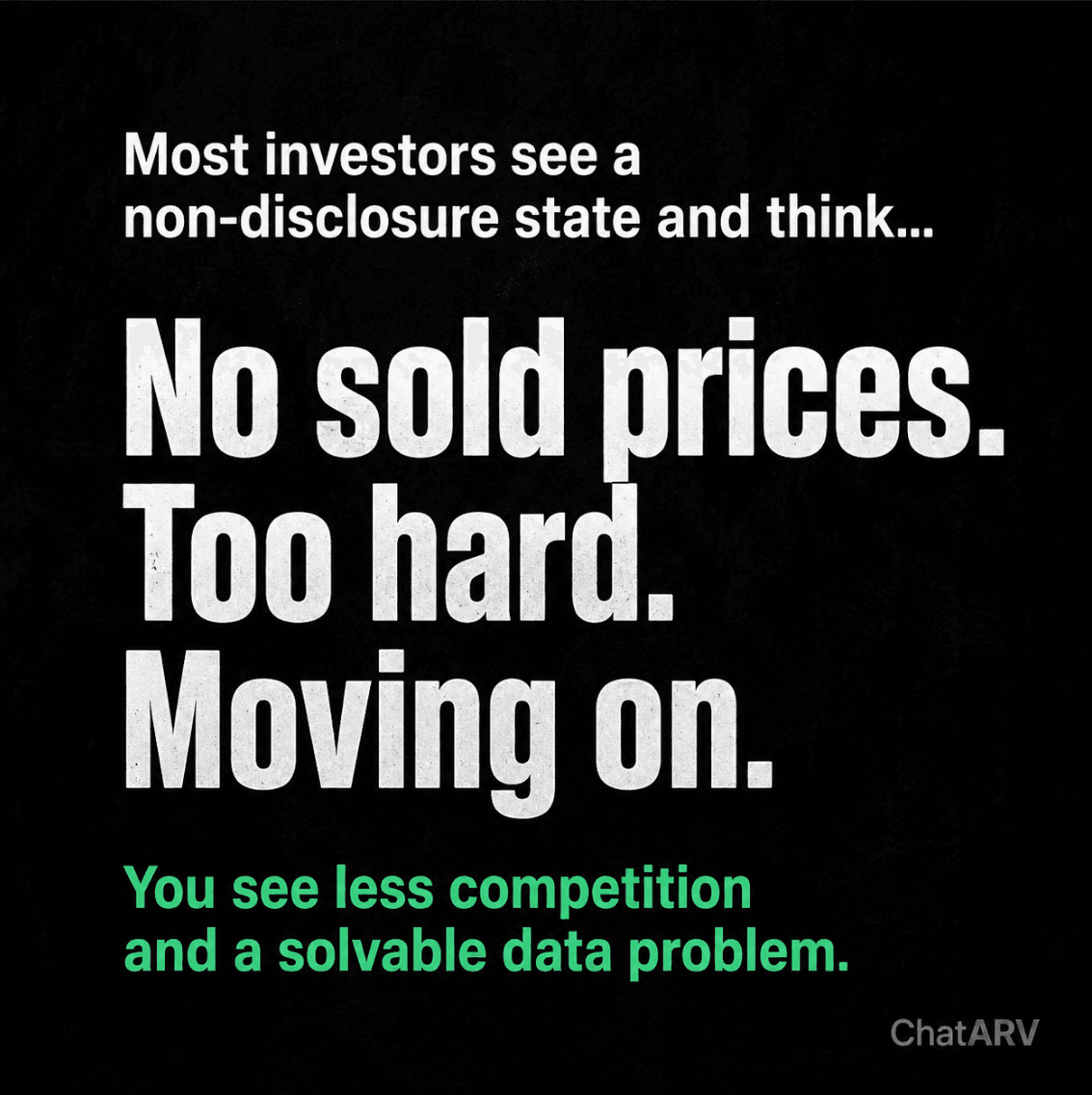
The data friction in non-disclosure states creates a real competitive advantage for investors who solve the comping problem. Less sophisticated competition avoids or misprices these markets. Investors with reliable comp sources don't.
What to do when there are no comps at all
This happens in genuinely thin markets. Widen your geographic radius incrementally, extend your time window beyond 90 days, and prioritize any comparable transactions available even if they aren't ideal matches.
If there are no comps, wholesalers shouldn't be wholesaling there. No transaction activity means no buyer pool, and no buyer pool means no exit. Other types of investors should proceed carefully and ask whether the lack of activity signals an overlooked opportunity or just a dead market. Usually it's the latter.
The bottom line
The investors who do well in non-disclosure states solve the data problem before they need it. Either an agent they can call in five minutes, a platform that aggregates MLS data, or both.
Run comps that hold up in non-disclosure states
ChatARV uses MLS-sourced sold data across all 12 non-disclosure states so you can screen volume and build transparent reports. Start with a free 7-day trial.